Remote Area Infrastructure Solutions
How engineers and network operators are bringing high-speed charging to rural corridors where the electrical grid simply cannot support the load.
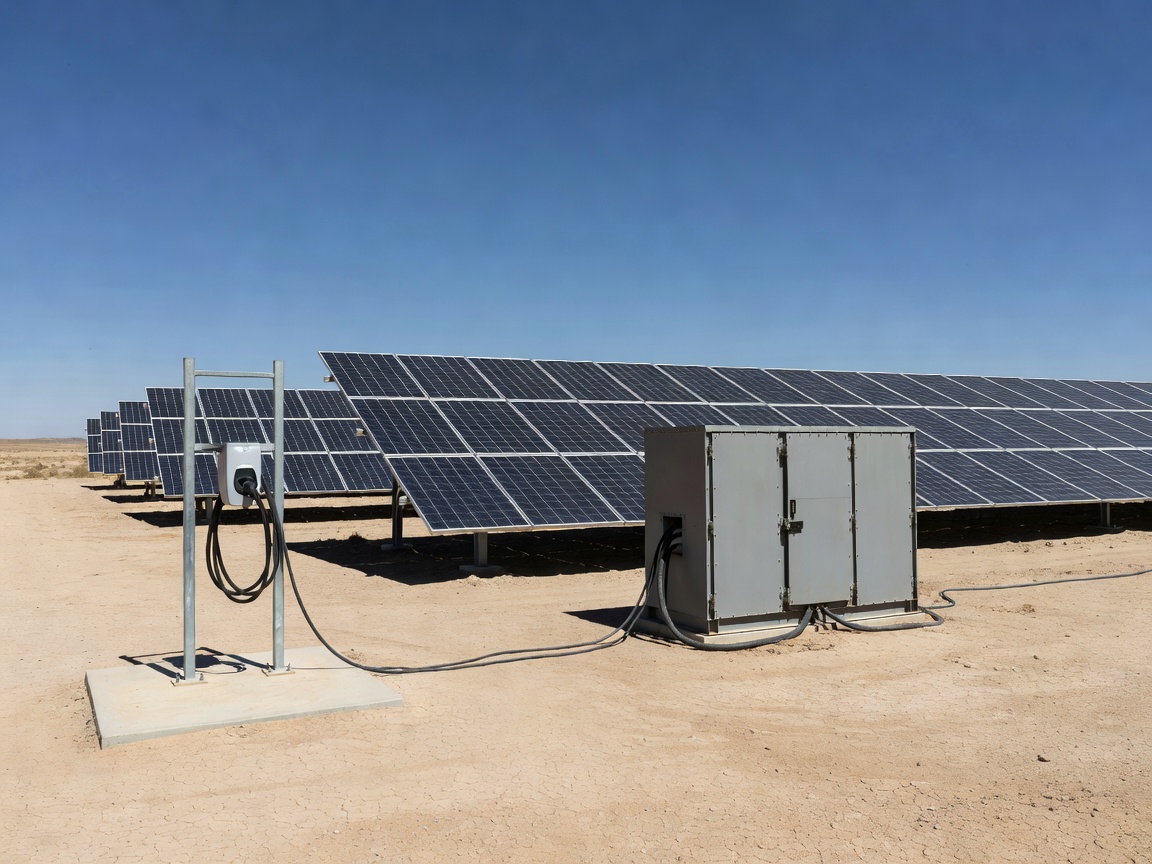
While urban centers and major interstate highways enjoy a dense saturation of DC fast chargers, the true test of electric mobility lies in remote, rural environments. Reaching a national park, crossing expansive deserts, or driving through mountainous terrain introduces a stark reality: high-power charging requires massive electrical grid capacity, and in remote areas, that grid capacity often does not exist.
The Grid Connection Bottleneck
A typical modern EV charging hub with four 350kW dispensers can draw upwards of 1.4 megawatts of power at peak utilization. To put that into perspective, that is roughly equivalent to the power draw of an entire residential neighborhood. In remote areas, local substations and distribution lines were designed for light agricultural or sparse residential use. Attempting to draw a megawatt of power would cause immediate brownouts or catastrophic transformer failure.
Upgrading these grid connections involves trenching miles of high-voltage cable, navigating complex environmental permitting, and securing massive capital investment. The timeline for a rural grid upgrade can span from three to seven years, heavily stalling the expansion of charging corridors in "charging deserts."
Battery-Buffered Fast Chargers
To bypass the grid bottleneck, network operators are increasingly turning to battery-buffered chargers. These systems integrate a large stationary lithium-ion battery pack directly into the charging hardware. Instead of drawing 150kW directly from the grid, the station slowly sips power from a standard, low-voltage rural connection (perhaps only 20kW to 50kW) 24 hours a day, storing it in the integrated battery.
When an EV arrives, the station discharges the stored energy from the internal battery directly into the vehicle at high speed (e.g., 150kW). This decoupling of grid draw from vehicle draw solves the infrastructure problem overnight. While they are limited by the capacity of the buffer (if five cars arrive back-to-back, the buffer will deplete and charging speeds will throttle down to the grid's raw input), they are perfect for remote routes with low but steady traffic volumes.
Off-Grid and Microgrid Solutions
In locations entirely devoid of utility connections, microgrid solutions are being deployed. These typically involve a combination of large-scale solar canopies, small wind turbines, and massive stationary battery storage arrays. While capital-intensive, they offer a completely emissions-free charging solution for the most isolated environments.
Government initiatives, such as the NEVI program in the United States and LEVI in the UK, have recognized the necessity of funding these complex installations. Subsidies are being heavily directed toward closing these geographical gaps, ensuring that EV ownership does not restrict a driver's ability to explore beyond the urban sprawl.
The success of remote area infrastructure is not merely about convenience; it is about equity. Building out rural networks guarantees that all communities, regardless of their proximity to high-voltage transmission lines, can participate in the transition to electric transportation.