Hotel & Destination Charging Etiquette
How to leverage Level 2 AC infrastructure to eliminate road trip charging stops, and the unwritten rules of sharing scarce plugs.
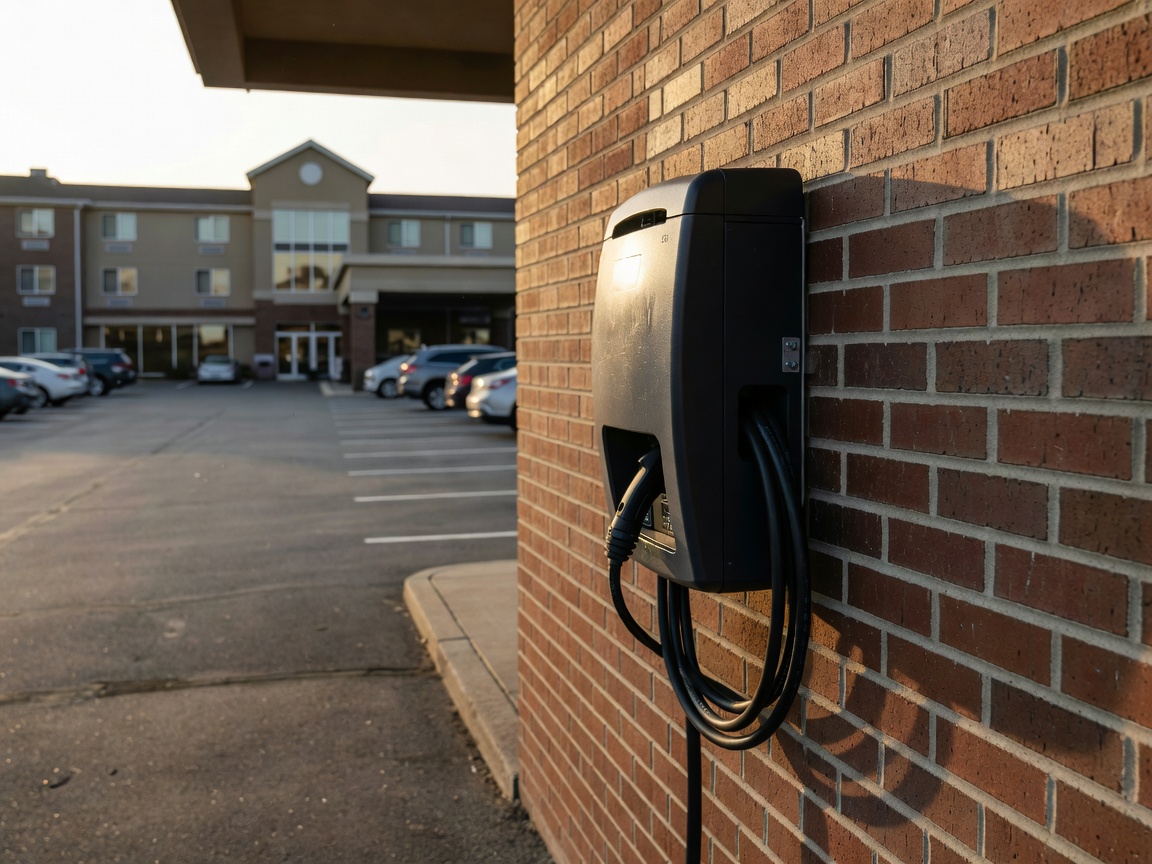
While high-speed DC fast chargers garner the most attention in road-trip planning, the true secret to effortless long-distance EV travel lies in destination charging. Arriving at a hotel, plugging into a Level 2 AC unit, and waking up with a 100% state of charge completely eliminates the need for a morning fast-charge stop. It transforms dead time (sleeping) into charging time.
The Economics of AC Charging
Destination chargers are fundamentally different from corridor fast chargers. They operate on alternating current (AC), relying on the vehicle's onboard inverter to convert power to direct current (DC) for the battery. Outputs typically range from 7kW to 22kW. Because the hardware is vastly cheaper to install and does not require complex high-voltage grid upgrades, hotels and resorts often offer it as a complimentary amenity or at a low flat rate.
However, the reliance on destination charging introduces a specific set of challenges. Chief among them is availability. A hotel with 200 rooms may only have two or four charging ports. Unlike a fast charger where turnover is expected every 30 minutes, an AC charging session can last 6 to 10 hours. If you arrive late and the plugs are occupied, your travel plans for the following day are immediately jeopardized.
The Booking Challenge
Currently, the integration of EV charging into hotel reservation systems is poor. Most booking platforms allow users to filter for "EV Charging," but they cannot guarantee availability or allow guests to reserve a specific time slot. A charger might be broken, occupied by a non-EV (ICE'd), or monopolized by a single guest for the entire weekend.
Savvy EV travelers mitigate this by calling the front desk prior to booking. Key questions include: Are the chargers functioning? Are they reserved for guests only? What is the penalty for internal combustion cars parking in the spaces? Until hospitality systems evolve to treat an EV port like a reserved suite, proactive communication remains necessary.
Unwritten Rules and Etiquette
Because destination chargers are scarce resources, a strong community etiquette has developed around their use. The cardinal rule is active management. When a vehicle is fully charged, it is expected that the driver will move it to a standard parking space, freeing up the plug for others. Monopolizing a charger for a multi-day stay while holding a 100% charge is widely considered poor form.
In scenarios where a charger is occupied upon arrival, leaving a note with contact information on the dashboard is common practice. Applications like PlugShare allow drivers to "check in" to a station, state their expected departure time, and message one another to coordinate plug swaps.
Furthermore, standardizing connectors is vital. While Type 2 connectors dominate the European market, North America is in a transitional phase between the J1772 standard and the emerging NACS (North American Charging Standard). Carrying appropriate physical adapters ensures that a driver can plug into whatever hardware a hotel provides, bridging the gap until universal standardization is achieved.